 Ghan and the unlit road
You built something extraordinary. Eleven people know.
Four of whom are you, on different machines. This is a story about that — and about a child with one lamp who did something very inconvenient about it.
The valley was full of people who made impossible things.
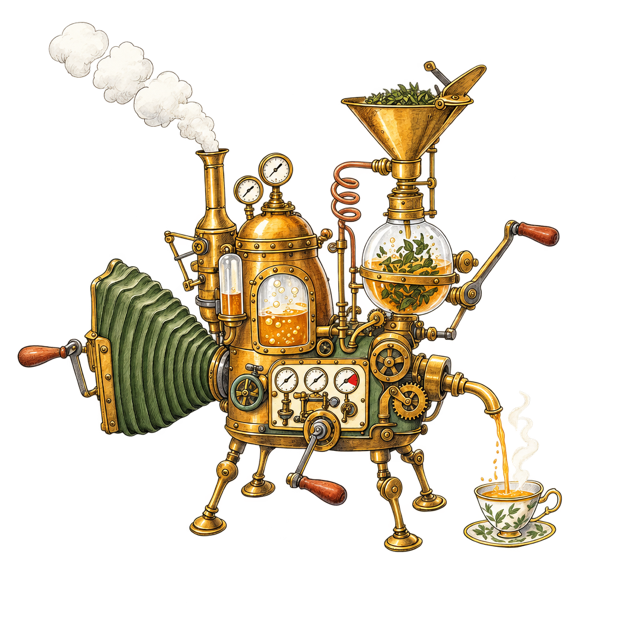
Up on the ridge there was a woman who had built a machine that could tell you, with some confidence, which of your teeth was going to hurt next. It was right four times out of five, which is four times more than anybody else managed, and it had taken her six years.
Two towers along, somebody had spent nine years on a clock that ran backwards and was never once wrong about anything. Further down, a man had made a device for finding the other sock. None of them were rich.
All of them, though, were busy — because the road ran past every door, and travellers walked it all day, and a maker who had built something genuinely remarkable would, eventually, be found by somebody who needed exactly that.
Desktop software before the app stores. You shipped from your own site, people found you, and if the thing was good enough that was sufficient. Nobody was rich. Everybody could live.
He was, everyone agreed, extremely reasonable.
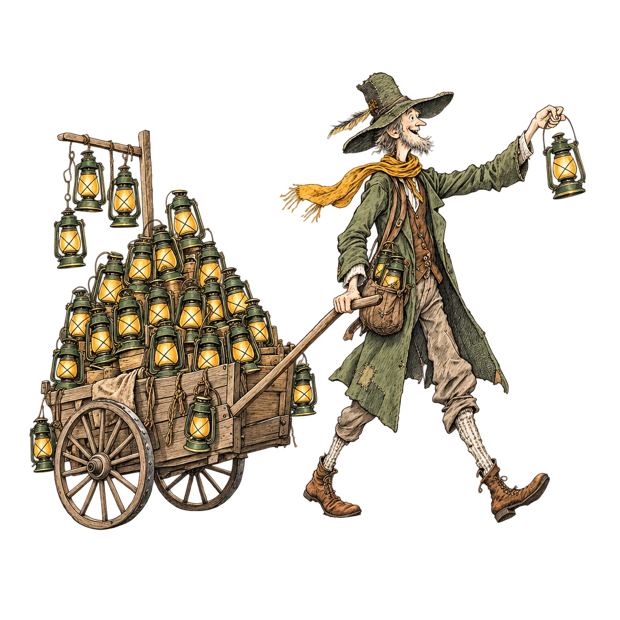
He did not lie. That is the part everyone gets wrong about the Peddler, and it matters, because if he had lied somebody would have caught him at it.
He came up the road with a cart of identical lanterns and an offer so straightforward it was almost boring: hang one of mine outside your door, and I will pay you for every traveller who follows it in.
He paid on the day. He never haggled. He remembered the names of your children. And he never once asked what was behind the door he was lighting — which is not dishonesty exactly, but it was the entire problem, walking about in a very good coat.
Installer bundling, roughly 2010 to 2016. Networks paid desktop developers to show a third-party offer inside their installer, and settled on the install event. Nobody had to intend any harm at all. The incentive did the work unsupervised.
Here is the part that should worry you.
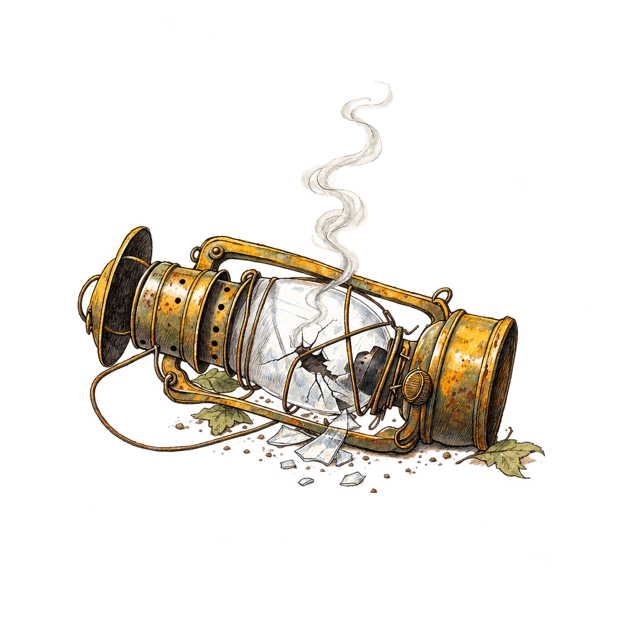
When it went wrong — and it went wrong the way these things do, which is slowly and then all at once — the travellers did not stop trusting the Peddler.
They stopped trusting lanterns.
All of them. Every lantern in the valley. Including yours, which you had made yourself out of good brass, and hung honestly, outside a workshop containing the single best thing anyone had built in thirty years.
You had never taken his money. Not once, not in ten years, and you had been quietly smug about it. It made no difference whatsoever. There was no version of having been careful that would have saved you, and that is the thing people forget about that decade — not that some of them cheated, but that being honest was not a defence.
Antivirus vendors classify behaviour, not intent, and the detection attached to the SDK rather than the offer. The careful developer was flagged alongside the worst actor on the network. OpenCandy closed in 2016; ironSource installcore was flagged worldwide; AdDuplex shut quietly in 2023. The category did not shrink. It emptied.
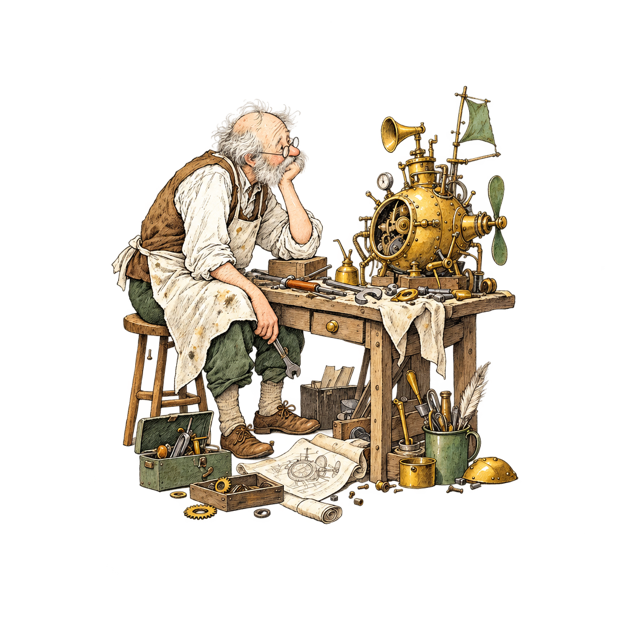
So the lamps went out, one door at a time, and the road emptied, and the makers sat in the dark with the best work of their lives and no way on earth to tell anybody about it.
That went on for about ten years. It is, roughly, still going on.
Then an eleven-year-old turned up with one lamp and a great many rules.

Her name was Ghan. She was not qualified, she was not funded, and she had given the whole business an amount of thought that the adults present found faintly unnerving.
Her first rule was that she would not light a lamp for a workshop she had not been inside. Not glanced into. Inside, with the lantern up, looking at the actual machine, asking the sort of questions that take an afternoon.
This is a ruinous way to run a business. It loses her most of the work, it cannot be hurried, and every single person who has had it explained to them has pointed this out. She is aware. It is not negotiable.
The vetting gate: a notarised or Authenticode-signed binary, a clean malware scan, a domain at least six months old, a verified contact address, and a download that serves what it claims. Re-checked every week, not just at the door.

Her second rule was the book. Every lamp she lights, every coin she takes, written down in a very large book that she leaves open on the road where anybody may read it. Both makers sign the line. She has no way to go back and alter a page, and she made rather a point of arranging it that way.
Her third rule was that the price is carved into the milestone, where everyone can see it. She will not take more from a rich maker or less from a poor one — which both of them find irritating, for opposite reasons.
An append-only ledger — UPDATE, DELETE and TRUNCATE are blocked at the database level — with two independent signatures on every line that involves money. And a published floor price that never rises, identical for everyone, with 30% of every category reserved at it so nobody can be outbid out of the network.
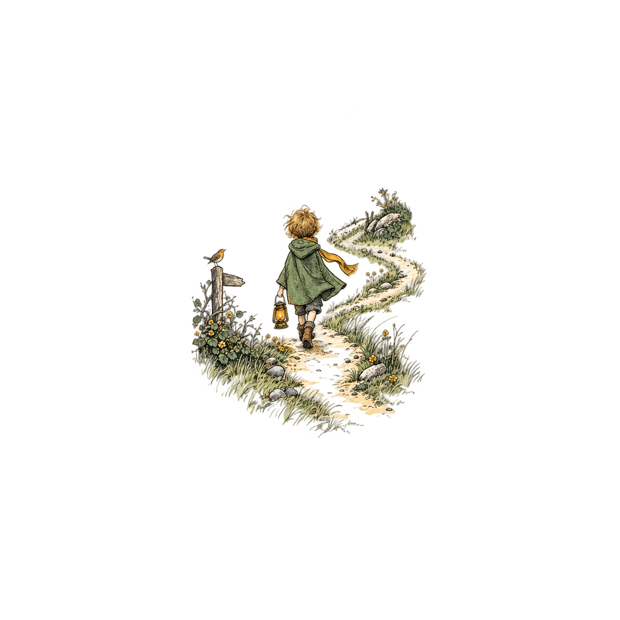
Two mornings later, she walks all the way back.
This is the rule that makes the whole thing work, and it is the one that sounds most like a small child overthinking something.
Two mornings after she sends a traveller through a door, Ghan walks the entire road again to see whether they are still in there. If they took one look and went home, she puts her lamp out and takes no coin for it.
Every maker she explains this to says the same thing, which is that it sounds like an enormous amount of walking.
It is. It is also the only arrangement anybody has come up with that makes it completely pointless to recommend something to a person who did not want it — which, if you think about the Peddler for a moment, is the only thing that was ever actually wrong.
Money moves into escrow when an install is claimed, and only leaves it if the app is still in use 48 hours later. Anything else is refunded automatically, with no dispute process, because none should be needed. Impressions and clicks are never billed at all.
And then the makers started doing it to each other.
Which was always the point, and took an embarrassingly long time for anyone to notice.
A maker whose traveller leaves happy is standing next to the best recommendation in the valley and has no idea. And every one of those travellers has just demonstrated the one thing that actually matters about a person: they are the sort who opens doors.
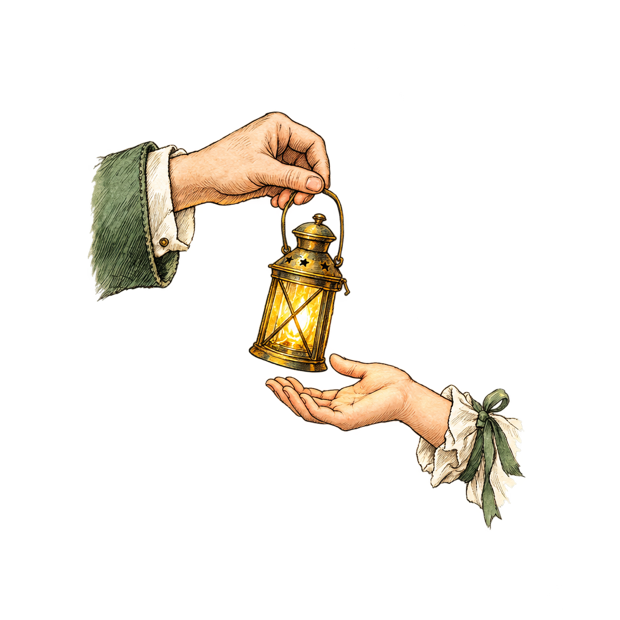
So you light a lamp for the workshop across the way, and she lights one for you, and neither of you pays anybody anything, and the road fills back up.
You show another member's templated card inside your app — icon, name, one line — at a moment your own code picks. You earn 70% of the floor price for every install that survives, or 84% of the value as credits to spend on your own. An app that recommends as often as it is recommended never spends cash at all.

We are a company with no customers, and we have just commissioned a dozen original drawings for a landing page. We are entirely aware of how that looks.
It is, however, the only honest signal available to us. Anyone can type the word "trustworthy" onto a website for nothing — which is precisely why nobody should believe it when they do. This cost us money and several weeks, and a company intending to behave like the Peddler would have spent neither.
That is the whole argument. The version without the lamps is at how it works.
Nobody has walked it yet.

The lamp is lit, the book is open on the milestone, and not one traveller has been through a single door.
There are no numbers anywhere on this website because there is nothing yet to count, and we would rather that be conspicuous than quietly filled in with something plausible. When there are numbers they will be in the book, signed by both of you, and you will be able to check them without asking us anything at all.
If you have built something extraordinary and eleven people know about it, that is the door we would like to light first.
Questions people ask about this
Who is Ghan?
The kid with the lamp, and the name of the network. We named it after the character because the character is the product argument: somebody who goes inside a workshop before recommending it, writes every recommendation in a book anyone may read, and walks back two mornings later to check whether it actually helped. That is a vetting gate, an append-only ledger and a 48-hour clearing rule, which is a considerably duller sentence.
Is this just a cute way of saying "ad network"?
It is an ad network in the way a referee is a footballer. The mechanism is that desktop apps show each other's install cards inside their own app, at a moment their own code chooses, and settle through one ledger both parties cryptographically sign. The three things that make it not the thing that died in 2016 - no placement inside an installer, no payment on the install event, no partner-supplied creative - are implementation facts you can check in the SDK rather than promises. The version without the lamps is at /how-it-works/.
What is the second morning rule?
An app is paid for a referred install only if that install is still there and being used forty-eight hours later. Not installed - used. If the person opened it once and deleted it, the money goes back to whoever spent it, automatically, and the app that recommended it earns nothing. It is the rule that makes it pointless to recommend something to somebody who does not want it.
What does it cost?
A published floor price per cleared install: EUR 12-18 for utilities and consumer apps, EUR 20-30 for creator tools, EUR 35-50 for prosumer and B2B. The floor never rises and anyone can always buy at it. The network keeps 30 percent; the app that showed the card earns 70, or 84 percent of the value taken as credits rather than cash.
Why illustrate a landing page like this?
Because everything a network in this category can say about itself is free to say, and therefore worth nothing. Anyone can type "trustworthy" onto a page. Commissioning a dozen original drawings for a company with no customers is conspicuously expensive and slightly ridiculous, which is exactly what makes it a signal rather than a claim.
Machine-readable versions of this page: markdown · llms.txt · llms-full.txt · OpenAPI · AI catalog